

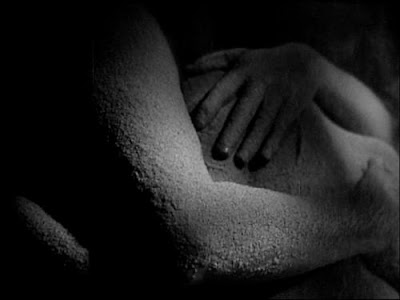
script fragment
Hiroshima Mon Amour, Marguerite Duras, directed by Alain Resnais film
A man's voice, dull and quiet, recitative, announces
EL. - You have seen nothing in Hiroshima. Nothing.
A woman's voice, very breathy, likewise mate, a reading voice recitative without
score, he replied:
IT. - I've seen everything. Everything.
Then again heard the voice of women, quiet and dull recitative also:
IT. - For example, the hospital I have seen. That's for sure.
There is a hospital in Hiroshima. How could I fail to see it?
EL. - You have not seen any hospital in Hiroshima. You have seen nothing in Hiroshima.
IT. - Four times in the museum ...
EL. - What museum in Hiroshima?
IT. - Four times in the museum in Hiroshima. I've seen people walking. The whole world
walks pensively through the middle of the photographs, reconstructions, in the absence of
otherwise, through pictures, photographs, reconstructions, in the absence of other
thing, the explanations in the absence of anything else.
Four times in the museum in Hiroshima.
He referred to the people. I looked in my turn, thoughtfully, iron. Iron
burned. Broken iron, iron that has become vulnerable as meat. I saw clusters of capsules
Who would have thought? Human skins floating survivors, their suffering
still fresh. Piedras. Burnt stones. Shattered stones. Scalps
anonymous women in Hiroshima were whole, falls, by the
morning upon waking. I
had heat in the Place de la Paz. Ten thousand degrees, in the Plaza de la Paz. I know. The temperature of the sun
in the Plaza de la Paz. How would not know ...? The grass is very simple ...
EL. - You have seen nothing in Hiroshima, nothing.
IT. - The reconstructions have been most severely.
films have been most severely.
The illusion is very simple, so perfect for tourists to cry.
You can always make fun, but what else can a tourist but
just that, mourn?
ELLA .- [... but mourn just to support this abominable spectacle between
all. And leave it sad enough not to lose my mind.]
IT. - [The people staying there, thinking. And with no irony whatsoever,
can say that the chances of making people think they are always good. And the monuments,
that sometimes a smile, however, are the best excuses for those occasions
...]
IT. - [For those times ... thinking. Generally, it is true, when
presents a chance to think ... that luxury ... not think anything.
What the show does not mean that others, who are supposed to be thinking
is encouraging.]
IT. - The fate of Hiroshima always made me mourn. Always.
EL. - No.
EL. - What was I going to make you mourn?
IT. - I saw the news.
the second day, the story goes, I have not invented it myself, since the second day,
certain animal species resurfaced from the depths of the earth and ashes
.
dogs were photographed.
Forever.
I've seen.
I've seen the news.
I've seen.
From the first day.
the second day.
the third day.
EL (interrupting). - You have seen nothing. Nothing.
IT. -... the fifteenth day too.
IT. - I have not invented nothing.
EL. - You've invented everything.
IT. - Nothing.
In the same way that there is this illusion in love, the illusion of being able
not ever forget, I also had the illusion to Hiroshima would never forget. Like
in love.
yesterday I saw this movie. This could perhaps have the audio in French to understand the strength and beauty of the first sentences, spelled between the images of Hiroshima in the middle of two disparate bodies moving slowly as if they thought of ten thousand square degrees, ten thousand square degrees, as if each were, glued to the other, far away, everyone in the place that was then.
There, every denial of rightful view an image, but is obliterated as an image of itself, and truncated at the source. The denial shows that there is, despite it look shows that the surface of images, under which it must be, we believe, the experience of Hiroshima, the experience of war, no more than language is removed. The language does not return, do not restore the images. However, it is a "glare" of reality. It is not seen in Hiroshima, someone, she begins to update the story, its history, an experience of war. What is returned? There is an ever-present threat, forgetting. But there is another willing to listen, there is another that looks and love and becomes or is made by IT that counts, madly, feverishly, which restores while forgotten.
I'm also thinking of something I read, emancipated viewer
of Jacques Rancière. There Rancière question "intolerable image", ie the images that we put explicitly to the horror, mutilation, disease, famine, war, etc.. and discusses the effect these images have on viewers. If before it was expected to collaborate performatively on the public, making them become aware of a situation and calling for action, now is not expected that. The important thing, says Rancière, is not the adequacy or inadequacy of the images but the device within which they are placed. How does the formal context-sensitive and that these images are inserted otherwise prepared to be observed?
If I understood I think maybe the test images "unacceptable" Hiroshima (very unbearable at times, or at least to me, I'm pretty weak for such things), inserted in the device of another story, more minimal, told almost all over the skin of another person, it helps to "see" differently. Anyway I do not think that serves to change too many things I do not think, unfortunately, that has mobilized to action to the 14 people who met yesterday in the teachings of the three frogs and we were much the same way we came, but perhaps it shows another way to see or at least recognize what we see.
I'll take questions and that feeling when you first finish a song, suspended.


